Miketz 5775

We begin the descent into the Egyptian exile as Yosef’s brothers travel to Egypt to buy food in order to survive the famine which encompasses Canaan. From a peak as the honored and privileged family of Yosef who saved Egypt and ruled as second to Pharaoh, we not only become slaves, but we lower ourselves, step-by-step, into the surrounding moral depravity so deeply it almost removes one from humanity. Had we descended just one additional step, had we adopted a “fiftieth” and final degradation, even God Himself would not have been able to redeem us.

I wonder if self-hate, both blaming and hating one’s Jewishness as the cause of all the oppression, was among the very first steps into depravity–repudiating our own values which, at least to some degree, would have prevented us for journeying farther down. Or, perhaps, it marked the final step, the one from which there is almost no return.

In either event, our ability to recover and to begin again striving to be our best is only a direct gift from The Creator Who was willing, in all our shame, to hold us close.

We need to remember this so we don’t allow ourselves to, once again, adopt the thought patterns and “values” of our enemies.

Posted in Uncategorized | 2 Comments

Chanukah 5775: What’s Different And What’s The Same?

Every year the dominant theme of Chanukah is the light we add to the world, especially in its darkest days. Every rabbi, myself included, gives the same speeches/lessons year after year. While we point out that the paragraph, Al HaNissim, we add to the daily prayer services mentions only the military victory and rededication of the Temple, we also emphasize that the only mitzva (commandment) assigned to us is lighting candles.

This year, largely due to, I believe, the political/security/diplomatic situations Israel is currently embroiled in, I’ve noticed a number of articles and sermons “debunking the myth” that Chanukah is all about the candles and the light. Rather, they emphasize the defeat of assimilationists, reasserting our sovereignty in Judea and Samaria and our reclaiming and re-activating the Holy Temple. The point being that we need to do all these things as well as merely light a few candles..

Of course all these goals are essential to our survival, both physically and in the spiritual sense. But these challenges have always been with us (substitute the more general “Return to Zion” for the limited “reassert our sovereignty in Judea and Samaria). In fact, all three are explicitly included in our thrice-daily prayer, recited for almost two millennia.

My question is why, this year, the increased urgency? And more importantly, why the de-emphasis of the miracle of light which we renew each year with our own candle lighting?

As a people, and some of our leaders are beginning to voice this, are frustrated. As a goal remains distant, it’s a lot easier to be patient about it. But we are, after so many years of exile, tantalizingly close to success. Very close to half the world’s Jews now live in Eretz Yisrael and we have sovereignty over it, even if our current political leaders decline to assert that sovereignty to parts of it. Har HaBayit, the Temple Mount, is an integral part of united Jerusalem, our eternal capital, even though our own government prevents us from even praying on it. A renewed Bet HaMikdash, Holy Temple, seems so close we can taste it. We’re just a few steps away and, thus, it’s even more painful frustrating to remain denied.

But why, davka (specifically) has this longing heated up for Chanukah 5775?

When functioning, the Bet HaMikdash is the main portal through which all the life-giving energy of the world enters our material realm. This energy is called אור, Or, light. We are charged with bringing this pure light/life into the entire world. When the Bet HaMikdash will once again function in it’s place, the entire world, and not merely the Jewish people, will bathe in infinite light.

Especially when this reality is so close we can almost grasp it, our small candles can seem so feeble, our efforts so insignificant.

An important lesson for, davka, specifically, this Chanukah is that as much as we long for the “real thing”, the “grown up” light, our tiny candles, faint as they are, actually do bring this very same infinite light into our world. They are, indeed, harder to see and it requires a much deeper exercise of אמונה (Emunah), “belief”, and בטחון (Bitachon), trust, to experience the true power of our little candles. While we long to bring even more light into the world, and one day, במהרה בימינו (B’m’heyra B’Yamenu), speedily in our days, we will have that honor, we nevertheless do bring that same light, albeit in a slightly attenuated form, each night of Chanukah.

חג אורים שמח

Posted in Uncategorized | 1 Comment

Complacence Is A Luxury We Can Never Afford

Parshat VaYeshev, our upcoming Torah portion, begins with the oft-told lesson that just because Ya’akov desired to sit back, l’shev, and enjoy his life after years of challenge and struggle, he was, instead, visited with even more pain-filled years. His beloved sons quarrel and Ya’akov spends the next seventeen years mourning Yosef, his favorite, whom he thinks is dead. The lesson taught here by Rashi and others is that Ya’akov sinned by thinking his work was done and he was free to retire.

There is a deep spiritual principle in our tradition, parallel to Newton’s third law of motion, that for every action there is an equal and opposite reaction. In our conceptualization, the greater the Kedusha, holiness, the greater the Tummah, profane. (This isn’t just a reflection of Newton’s law, nor is it arbitrary or perverse. Rather, in order for us to truly have Bechira, free will, the choices we face must be equal with no external incentive to choose the good. Rather, we choose good only because it is good and moral, even if it entails a steep cost. Otherwise, the “choice” would be a “no-brainer” and, really, no choice at all.)

Although the news media focuses primarily on the tragedies and problems of the world, and there are plenty of those, there is an unprecedented, at least for almost 2,000 years, amount of Kedusha in the world. We’re closely approaching the critical mass of more than half of the world’s Jews living in Eretz Yisrael and under Jewish sovereignty, finally seeing the “light at the end of the tunnel” of our longest and most tortuous galut (exile). Not only are a great many Jews privileged to live in Eretz HaKodesh, the Holy Land, but our achievements there are also miraculous. Of course, there are more Jews, men and women, observant and secular, learning Torah, in its many facets, than probably ever before. There are also incredible achievements in every other field of endeavor, from the miracle of “making a desert bloom”-agriculture to Nobel-awarded scientific achievements in medicine, electronics, technology, communications and other fields. Not only are we world-leaders in entrepreneurship, artistic creativity in music, visual art, theater, dance and literature far exceeds “per capita” expectations. Kedusha, you see, is not limited to Jews sitting and studying Torah, although it certainly includes that as well, but is made up of all the positive acts our people engage in. And, it’s amplified by our massive presence in a sovereign Israel!

Balancing that, of course, requires a tremendous amount of negative evil in the world and there is plenty of that, especially as it relates to Israel and the Jewish people. Not only is terrorism once again on the rise, with the shadow (or perhaps already the reality of) of a new intifada, but ISIS thrives just beyond our borders, leaping from one brutal “success” of unimagineable savagery, to the next. Anti-semitism is becoming common, once again, in a Europe that not long ago seemed pledged to “Never Again”. Neo-nazism is on the rise. Anti-semitism appears with ever-greater frequency in the United States where, for the first time since the establishment of the modern State of Israel, the executive branch is blatantly anti-Israel.

And that is only the Tummah in relationship to Israel and the Jewish people. In the general world, the “Arab Spring” has turned into an “Arab Winter” with hundreds of thousands of innocent civilians dead. The obscenity of human slavery not only in Africa where we hear the horror stories of Boko Haram, as well as in ISIS-controlled areas of the middle east, but even in Europe and the United States in terms of the sex-slave trade, is steeply on the rise. The economies of Europe are crumbling and the United States, once the beacon and guarantor of freedom is precipitously falling, beset with unemployment, race-hatred and despair. Weather and other natural disasters have become all-too-common.

Understanding the relationship between the great achievements of our age and the terrible disasters is important, but ultimately trivial. Watching the world, chas v’shalom, self-destruct while being able to smugly “explain it” only contributes to the Tummah! These insights are only of value if they provide a direction to improve things, to put the world on an irresistible path of Tikkun (repair) and ultimate Geula (redemption)!

The standard response, especially from the orthodox leadership, has always been to increase Kedusha, to study more Torah, to perform more Mitzvot, and as far as that goes they’re right. The shortcoming, of course, is that by strictly limiting the definition of Kedusha only those people of the yeshiva are really encouraged to combat the Tummah, and as earnest as they may be, this will be inadequate.

The point is that we all must add to the Kedusha in the world and we must acknowledge and partner with everyone who is doing that in whatever field of endeavor they work in. Working together, Torah scholar and policeman, journalist and scientist, doctor and teacher, artist and soldier, musician, counselor, diplomat, chef, taxi driver, salesman, lawyer and politician, mothers and fathers, uncles and aunts, brothers and sisters, all of us together contributing not only our own individual holy efforts efforts but the synergy of אחדות (Achdut), Unity, striving together in love. It might sound corny, but it is not only our destiny as Jews, it is our only hope to overcome the evermounting evil and destroy it.

Shabbat Shalom
Posted in Uncategorized | 1 Comment

Don’t Rely On Miracles–A Perspective On Chanukah

There is a Hebrew proverb, עין סומכים על הנס, Eyn Somchim al HaNes, which literally says don’t rely on a miracle. But, approaching Chanukah where we celebrate at least two miracles, and in at least two ways (we both recite הלל (Hallel), a set of  thanks-giving Psalms we say on Chaggim (holy days), Rosh Chodesh (new moon) and when we’ve experience miracles (including all eight days of Chanukah), and also add על הניסים, Al HaNissim (For the Miracles) to our thrice daily prayers as well as to the  ברכת המזון, Birkat HaMazon, the grace after meals), it seems that we’re celebrating  just that–our reliance on miracles!

Yes, it is a little contradictory to place as much emphasis on miracles as we do, celebrating Yetziat Mitzraim (Exodus from Egypt) and Kri’at Yam Suf (parting of the Red Sea) on Pesach, the entire Purim miracle and at least two miracles (the military victory and the long-lasting oil, on Chanukah), when we’re instructed to de-emphasize miracles altogether.

One simple explanation is that we should avoid behavior which leaves us in the position of requiring a miracle to save ourselves. Had we not whole-heartedly joined in the feast of Achashueras, thus fully assimilating in Persian culture, Haman would not have been necessary to remind us that we are Jews, עָם לְבָדָד יִשְׁכֹּן (Am L’Vadad Yishkon (Bamidbar 23:9)), a nation that dwells apart. Had we not allowed ourselves to sink to the 49th level of moral pollution in Egypt, imitating our hosts who became our masters, it would not have required a miracle to extricate us from there. And had we not allowed an idolatrous statue of Zeus to be installed in the Bet HaMikdash, the Holy Temple, the oil would never have become contaminated and the war against the Greco-Syrians would have been unnecessary.

In each case, due to our own actions and inactions, our desire to fit in with the dominant power of the day and our perverse need to forget who we really are, we brought disaster on our heads, leading ourselves to the brink of utter destruction. Looking forward, we need to remind ourselves who we are and avoid decisions and actions which are guaranteed to place us on the verge of extinction.

It’s interesting that the word for miracle, נס, Nes, also means a sign. The obvious connection is that when we lose sight of God, lose sight of ourselves, we are in big trouble. When we could have prevented a disaster or a potential disaster but, rather, created a situation beyond our own abilities to repair, what we really need, much more than the miraculous rescue, is the sign, the reminder that God exists and what our relation to Him really is.

One lesson from Purim is that, ultimately, there is no difference between ברוך מרדכי, Baruch Mordechai, Bless Mordechai and ארור המן, Arur Haman, Curse Haman. Whether we’re drawn to God and our obligation-driven relationship with Him through positive incentives or, painfully, through the frequent travails our people have suffered, we still end up with our renewed and reinvigorated relationship. Or, as the cliché many of us were brought up with, “an ounce of prevention is worth a pound of cure.”

Chag Urim Sameach!

Posted in Uncategorized | 1 Comment

In Praise Of “Vav”

Our nusach, liturgy, both weekday, Shabbat, Chaggim (Festivals) and the Yomim Noraim (High Holy Days), includes many acrostics (prayers/praises based on the Aleph-Bet (the Hebrew alphabet)). Although not included in the liturgy, the longest of the Psalms, 119, is an acrostic composed of eight verses each for each letter!

It’s not easy to write an acrostic, at least to write one that’s not trivial. To use the entire alphabet, and in order (occasionally in reverse order, too!), or in these cases the Aleph Bet, requires twenty-two verses (Ashrei, the 145th Psalm, leaves out one letter, נ (Nun), but that is also part of the design), exponentially increasing the difficulty.

One letter, however, ו (Vav) is almost always easy to work in since it can, and usually is, used as a prefix which means “and” (it can also mean “or”) so it can come before just about any word you want. On the one hand, it can seem a “cheap” letter, but its ubiquity and the very fact that it provides such ease is part of its power.

Of course, “Vav” is also one of only three letters which make up the Divine Name Yud-Heh-Vav-Heh, the holiest of these names, the one that represents (among other things) God’s quality of Chesed, Divine Love. Here, also, it forms the “glue”, joining the first, or upper Heh with the final, lower Heh. Likewise, it joins the upper worlds with our material world. In the realm of Sephirot (Divine emanations of the holy light/energy which provides for and animates all existence), it represents Yesod, Foundation, which joins the higher Sephirot to Malchut, the Shechina (Feminine aspect of Divine Existence), also our world of actions. It represents the Tzaddik, the Righteous Man, and holy, controlled sexuality. Within the Lurianic system of Partzufim (Personalities, but also groupings of the Sephirot) it represents Zeir Anpin, the “small face” (young adult), which is comprised of the first six (numerically, Vav stands for six) of the seven “lower” Sephirot (Chesed, Gevura, Tiferet, Netzach, Hod and Yesod), the prototypical Male (Malchut, the seventh Sephira, represents the prototypical Female). Vav also represents the six days of the workweek which lead to the Kedusha, holiness, of Shabbat.

Interconnectedness, which is really the essence of Vav, is what distinguishes a random, purposeless and chaotic universe from the one we occupy. Hashgacha Pratit, the infinitely complex, completely unknowable Divine Oversight manifests by bringing people and events together. Our values, reflected in Halacha (religious law), join opposites by obligating us to perform the positive and forbids us from the negative expression of our actions. It truly joins the upper worlds of pure, non-empirical, light (energy) to our material realms of experience.

When we recite the Sh’ma, Adonay (י-ה-ו-ה) Echad (א-ח-ד), One, we reveal another secret of Vav. א Aleph, the first letter of the Aleph Bet, with the numerical value of one, represents the Divine Unity, the אחד (Echad) Oneness. If you look closely, you’ll see that Aleph, א, contains three strokes, and examining them even more carefully you’ll notice that they are י-ו-י (Yud-Vav-Yud) (a diagonal Vav with an Yud on the right (Chesed, Love) pointing up, the other Yud on the left (Gevura/Din, Strict Judgement) pointing down). Two Yuds, each representing 10, with Vav, 6, equals 26 using the technique of Gematria. The rules of Gematria tell us that two words with the same Gematria, numerical equivalent, are also equivalent in other ways. י-10, ה-5, ו- 6, ה-5 also equals 26. י-ה-ו-ה is, indeed One, a secret revealed by Vav, our great connector.

איש ואשה (Ish v’Isha) Man and Woman, חתן וכלה (Chatan v’Kalla) Groom and Bride. Ultimately, Vav joins man and woman, bride and groom, Allness and Oneness, God and Creation in love, A Love Supreme* (אהבה רבה (Ahava Raba), from the blessing before the morning Sh’ma on Shabbat and Chaggim, Holidays).

* Link to John Coltrane’s seminal composition, A Love Supreme

Posted in Uncategorized | 1 Comment

Becoming Your Own Worst Enemy

וַיַּרְא יַעֲקֹב אֶת־פְּנֵי לָבָן וְהִנֵּה אֵינֶנּוּ עִמּוֹ כִּתְמוֹל שִׁלְשׁוֹם, “And Yaacov saw the face of Lavan and, behold, it wasn’t as it appeared to him yesterday or the day before (Bereishit 31:2)”. This immediately follows the rather difficult section where Yaakov acquires his wealth by what appears to be magical tricks, inducing Lavan’s herds to give birth to the highly unusual brown, striped and spotted sheep that Yaakov claims as his wages.

Rabbi Shloime Twerski zt”l offered an unexpected interpretation of that verse. While the surface meaning seems to be that Lavan has changed his attitude towards Yaakov, no longer seeing him the easily exploitable son-in-law, thus warning Yaakov that it’s time to clear out of an increasingly unfriendly environment, Rabbi Twerski offers the explanation that after all the years when Lavan appeared to Yaakov as a dishonest trickster, at this moment Lavan no longer seems to be so far beyond acceptable rules of conduct.

Lavan, obviously, has not changed, but, rather, Yaakov sees himself on the verge of a major change. He is just a half-step away from jettisoning his own values and honor and adopting Lavan’s. “Go along to get along” has, finally, become a very attractive beacon.

Reaching into his own depths of faith and into the earlier training he received in his fathers’ values, he realizes that the moment has come to immediately leave what has suddenly become a too-comfortable but nonetheless corrupt environment. Just as we’re taught, a few generations later, that had Yisrael not left Egypt when they did, they would have descended to the lowest level of depravity and would no longer have been able to escape, had Yaakov not immediately left Lavan’s orbit he would have, in essence, become Lavan and the Jewish people would never have been.

מעשה אבות סימן לבנים (Ma’ase Avot Siman l’Banim), the experiences of our ancestors (as described in the Torah) are a warning to us, their descendants. So many of our people, taken in by latter-day Lavan-style tricksters, have adopted the words, values and actions of our greatest enemies, taking on the hatred of Israel as if it were a virtue. Although we’re probably in the very best and apparently most secure situation the Jewish People have been in since the destruction of the Holy Temple by Rome and our exile throughout the world two thousand years ago, we’re also only that half-step of becoming our own worst enemy.

Yaakov had the courage and wisdom to reject Lavan. May we, in our generation, follow his example.

Posted in Uncategorized | 5 Comments

Massacre Followed By Betrayal

For those who were shocked at the various European votes to recognize “Palestine” as an independent country as well as revelations of planned EU sanctions against Israel for insufficient appeasement, all following so closely on the heels of the savage murder of four rabbis engaged in prayer in a Har Nof synagogue, not to mention the murder of the heroic Druze policeman who was the first responder to the massacre, I can merely refer you to this weeks parsha (Torah reading), Toldot. Not only do we see Esav’s refusal to accept the responsibility for his part in the great enterprise of Tikkun Olam, partnering with God in completing the project of Creation, shown in his contempt for his birthright, we see his resentment at Yaakov’s reward, his father’s blessing, for accepting that responsibility. The parsha ends with Esav choosing Machalat, the daughter of Ishmael, as his wife.

Our tradition teaches us that there is redemption and an integral place in the future for both Ishmael and Esav, the sons of our patriarchs, hence our cousins. But that redemption comes at the end, after we, the Jewish people, have fulfilled our own responsibilities and have taken the job as far as we can on our own. In other words, we must “do Jewish”, which means operate in the world of Torah and Mitzvot, regardless of the indifference or even the contempt and opposition of the rest of the world.

Of course, Torah and Mitzvot, taking place in the present and looking to the future, is not so easy to define right now. Likewise, it’s absolutely wrong to reject or ignore the Torah and Mitzvot done by Jews who are not fully involved in the frum lifestyle. None of us are capable of “reading” the neshamot (souls) of our fellows and determining what their assigned spiritual task is–we can only do our own work.

Foremost among everyone’s list, however, is the Mitzva of Ahavat Yisrael, loving and supporting our fellow Jews. At times like these, following the synagogue massacre, following the murder of the three-month-old baby, the young woman near Efrat, the young soldier in Tel-Aviv, the shooting of R’Yehuda Glick and all the other savagery of the past month, it’s easy to feel solidarity and unity. The real challenge is when life slips back towards “normality”, when our disagreements with each other turn vicious and hateful, when we’re no longer so aware of the loneliness inherent in being Jewish in a vastly non-Jewish world.

As Jews, our ideal future emphatically does not include the rest of humanity adopting our religion. But it does, even more emphatically, require the rest of humanity to act with humanity. The current bond between Esav and Ishmael is both painful and dangerous. We see a culture based on reason irrationally turning a blind eye to murderous passion. It makes no sense and not just in Israel, but in the streets of Europe and the campuses of America, Jews are regularly attacked. While we must show strength and truly defend ourselves, we have no time to waste with apologetics or with appeasement. But mainly, we must continue our work, even under the harshest conditions (which, thank God, are far from our current reality), and create the reality where, finally, even Esav and Ishmael will join us in peace and brotherhood.

Posted in Uncategorized | 2 Comments

Words From Jerusalem, Thoughts on Lech L’Cha

I fear that some people who have anticipated my sharing “words of wisdom” from Israel might be disappointed, but my overwhelming feeling here is one of humility. I’m in a city where Torah knowledge flows in abundance and there are so many people with so much more understanding than I’ll ever achieve. There are also an even greater amount of people here who have first-hand experience with surviving several wars, enduring active terrorism, living with the dilemma of justice vs survival. Without discounting in any way my own knowledge of our tradition, my own life experiences of loss and fear, I feel like Gulliver in the land of Brobdingnag.

Arriving a few weeks ago, as I face returning to Seattle I see that my very specific plans and goals have, for the most part, been left unfinished if even begun at all. My certainty and agenda have been replaced with the wonderful realization that “I don’t know”.

One thing I’ve noticed over the years is the great synchronicity between life and Torah. I feel that I’ve participated in my own version of לך לך (Lech L’cha), the Torah portion read just this past Shabbat, where Avram is sent on a journey to the unknown, where all familiarity has disappeared, where he doesn’t even know his own true identity until it is finally bestowed upon him and he becomes Avraham. Even with a new personality and a clear mission, he still must discover what lies ahead.

There is a cultural cliché that if you ask an Israeli how to get somewhere, he’ll give you very definitive instructions whether he knows the answer or not. In a land where everyone seems to proceed with great certainty, my own experience, my own blessing, has been profound uncertainty.


Posted in Uncategorized | 1 Comment

Getting Real: Yirat Shamayim as Fear of God

As anyone who’s read very many of these article knows, I strongly advocate developing evolved, both time-and-place-appropriate practices in our faith. While I don’t know what these emerging changes will look like, I do know what they shouldn’t look like. We must never enslave our spiritual work to narcissism, to ego-flattery, to comfort/therapy, nor to making Torah practice acceptable to the outside world (there is nothing within normative Torah practice that advocates violence or dishonesty, so there is nothing to excise, but many of our mitzvot do transcend the rational, which has become a false god within the faith of secularism).

The oft-stated purpose of our Avoda, holy service, is to partner with The Creator in bringing the world to its ultimate perfection. Since we can’t know in advance what that will look like, and even if we could, the project’s complexity greatly exceeds human intellect. Thus, we rely on God and the Torah, even though the link between mitzva practice and desired outcome is rarely, if ever, comprehensible. Rather, out of our love, and the implicit trust that love implies, we hand over our individual autonomies to God.

Ultimately, nothing is scarier in human life than losing control. Losing it to other people, especially in a political/military sense is terrifying and every people, every nation strives to protect its security and autonomy. As Jews, that struggle has historically been highly ineffective–this is an area in which we are, indeed, the world authority.

On a personal level, little is a terrifying as an intense loving relationship. Much as we long for it, faced with completely opening ourselves to another, dropping all of our defenses and privacy, few are willing to go all the way. To fully trust our lives and tender needs to the hands of another is conceivable only when we assume responsibility for the welfare of that other person, providing them the reciprocal safety to fully give themselves as well. Even many successful and long-term marriages don’t go that far. We are, indeed, terrified of love.

Likewise, when asked to fully trust The Creator, saving nothing in reserve, holding no “hole-card” up our sleeve, we tremble. This is the Yirah, fear, that on its own is debilitating but, combined with the Ahava, love, allows us to fully travel the path to our, and His, goal.

This approach discredits basing “new halacha” on its inner psychological effects, whether it calms us, makes us feel good, “spiritual” or “connected”. Of course, we might feel all these things, but often we won’t, or at least they will be long delayed, perhaps beyond our individual lifespan. We also gain nothing, only lose, watering down our millennia-old practice to bring it into conformity with surrounding society. This is the lesson we preach but forget, year after year, around the upcoming festival of Chanuka when we had to defeat exactly that assimilation with Greek culture. “If only we weren’t so different, so separatist, if only we were “universal”, the world will love us,” is a false hope that has brought only death and destruction upon us over the generations.

Much like choosing a single mate out of the pool of all potential lovers begins with the overcoming the calculation of “could I maybe do better?”, as Jews we also have to overcome the gambler’s fear of staking all on a single roll of the dice.

Although our tradition, our prophets and sages, assure us that we ultimately will win, taking that step is truly Yirat HaShem, absolute fear and terror, not awe or awareness or any other euphemism we might prefer to make it less scary.

It’s time to get real and take the journey armed only with the ultimate sense of Ahava, love of God.

Posted in Uncategorized | 4 Comments

Early Impressions of Israel, This Time Around (October 2014)

Two disclaimers. First, I cannot avoid experiencing Israel against the background of seven years of memories living here a quarter century ago. Secondly, it’s late at night and I risk exhaustion, and perhaps coherence, in order to not lose these thoughts before writing them down. Less an essay of detailed thought, but, as titled, only first impressions.

The most striking feeling is the pulsating energy which seems to radiate from everyone I encounter. Really, more like from everyone I even see on the street. No, not everyone is happy and glowing, but the vitality, the חיות (khi-yoot), life energy is impossible to not notice.

It reminds me, returning to more than twenty-five years ago, of when I would photograph extensively in the desert and here, in Jerusalem, on the edge of the desert. It’s hard for plants to find the water to survive, but those plants that do grow burst with life. I see in many of my old photographs that they would literally pop from the ground with the force of longing to thrive. Spiritual explanations describe the energy that flows forth from Eretz Yisrael and it just does. It’s palpable.

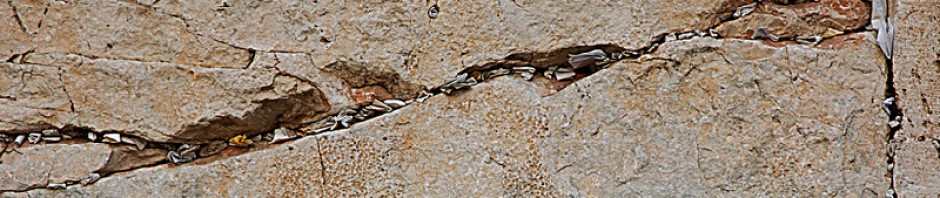
I was walking out of the Old City after visiting the Kotel (Western Wall of Har HaBayit, the Temple Mount) for mincha (the afternoon prayer), leaving Sha’ar Yafo, Jaffa Gate, into the modern city, as I saw and heard ambulances fighting through almost total congestion to rush to aid the victims of the terrorist attack that murdered a three-month-old baby. I realized later that I must have been at the Kotel at the exact same time that family was, when they joyously brought their daughter to her first and only visit there.

I missed, for the most part, the “intifadas” (race riots) when mass-murder terrorist attacks against innocent Jews became common. I missed completely all the wars when civilians, including those in the country’s center (i.e. Jerusalem, as well as Tel Aviv) were subject to random missile attack, forced to rush, terrified, into bomb shelters. I never before experienced first-hand the solidarity of support and commiseration for the families of the dead as well as for the other victims who were “merely” injured.

I talked with friends about their attending the funerals several months ago for the “lone soldiers”, the young people, many from the US, who had come to Israel without families in order to serve. When I read about the enormous turnouts for these funerals, I was hard-pressed to really, at a gut-level, understand the phenomenon. I admired the people who did attend these funerals and I was proud that my people, in the abstract, would do such things, but I felt these last couple days that I, myself, lost a close family member.

And I’m proud that those very few people who felt compelled to respond with protests against Hamas and the PLO (PA) who sponsor and encourage murder, as well as Israeli government policy which seems to allow it, turned even one of their protests violent. Filled with pain and, yes, with anger, for the most part our people conducted themselves as menschen, as human beings with ethical values.

I also spent a full day in the ultra-orthodox ghettos of Jerusalem. I was hit with the realization that the Jewish people have, largely, out-sourced our religion, or at least “authority” over it, to people who, for the most part, live in the eighteenth century and in a very different, far-away, land. I remember, years ago, a sense of admiration for their persistence, but today I mainly felt sadness for them and for all of us. I was struck with a strong experience of the timelessness of The Creator and the futility of tying Him to any specific historical period. God is alive today and our challenge to merge with Him as co-creators, striving to bring completion and perfection to the world, cannot be met exclusively, or perhaps not very much indeed, with methods and techniques uniquely vital to have preserved us in exile in the past.

I have no idea how I’ll join the effort to refocus the authentic path, by which I mean based only on our blueprint of Torah and Mitzvot and not on our own egos and narcissism, to one of Eretz Yisrael, of living once again in our own land and in the times have brought this miracle into being. But I do know that finally, after millennia, we can return to creating rather than merely (and I don’t by any means underestimate the difficulty and immense value of the millennia-long life-and-death miracle of preserving ourselves, as I also greatly value the wisdom generated and transmitted to us by those efforts) surviving. We’re living in nothing less than a God-given opportunity and we have no right to waste it.

And I wonder, without even hints of answers, how we’ll enlist all of our people, including those living so far in the past as well as those living so far (spiritually and ethically) from any current engagement at all. Because we’ve been told by our Nevi’im, our Prophets, and our Chachamim, our sages, that we can only succeed if all of us succeed together (but not uniformly).

And, as a much older man than the first time I was here, I see the new generations and rejoice that while I must, of course, do my part, it’s not on me and not on my generation to be a solo act. A great relief with which to look forward to Shabbat. May it go out to all of us around the world on this very special Shabbat aimed at bringing the entire Jewish people, world-wide, together in a deeper experience of Shabbat.

Posted in Uncategorized | 6 Comments